
Blow’s Fresh New Take on Facial Tissues


Founder Ariel Westphal brings a fashion buyer’s eye to an everyday essential, pairing premium tissues with refillable design.
Ariel Westphal had been sick for weeks, her skin was raw, and the printed tissue box was starting to feel like a personal insult.
“I was just furious that I had spent money on something that left my nose feeling worse, plus I had to look at the stupid cartoon design,” she tells The Beauty Brief.
Asked what first made her question the tissue category, the founder of Blow Tissues answers with a single word: “Rage.”
It is an understandable origin story for anyone who has ever nursed a cold with a growing pile of tissues and a nose that hurts more with every wipe. Yet most of us repeat the same purchase without much thought. We recognize the packaging, choose a box, and accept whatever comes with it.
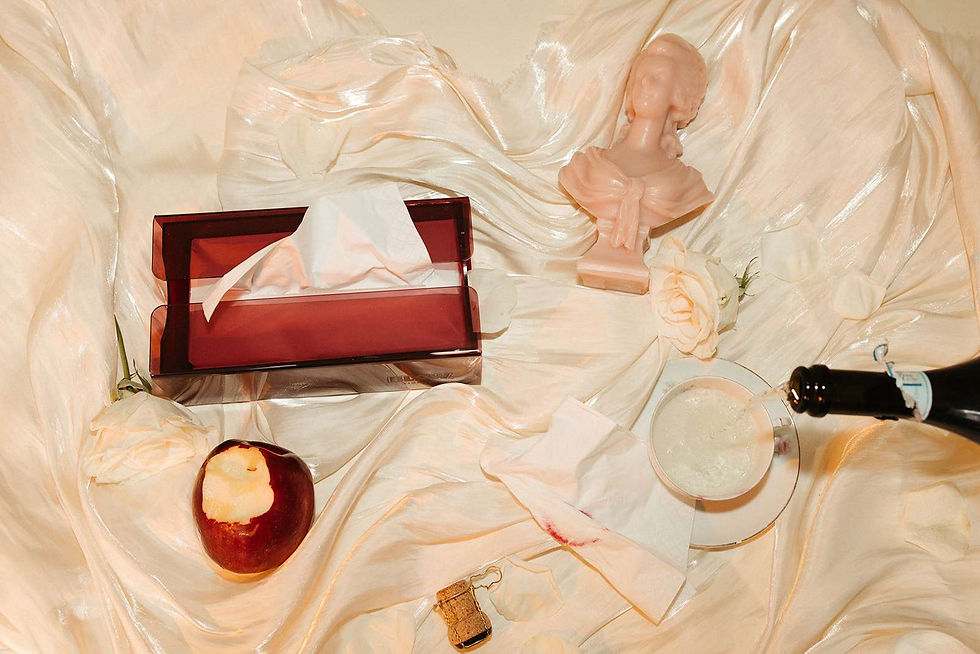
Westphal’s frustration interrupted that routine. She began researching the facial tissue industry, testing products, and asking why an essential used so frequently on our faces seemed to invite so little scrutiny. Blow emerged from that process as a premium tissue brand with a refillable box system, bringing attention to both the product and the object we keep on our desks, vanities, and nightstands.
A buyer’s eye for an overlooked category
Westphal spent about a decade in fashion before moving into finance for nearly another decade. Building Blow gave her a way to bring the creativity of the first chapter together with the structure of the second, drawing on experience in buying, marketing, and business along the way.
Buying had taught her to question every element of a product before it reached a store. Was the price appropriate? Would someone notice it? Would it display well, make sense immediately, or work as a gift? Which colors and sizes would sell, and what would persuade a customer to return?
Those questions were part of Blow’s development long before she knew whether it could become a viable business.
“As a buyer, you have to consider the why behind literally every single thing you put into a store and really dissect why someone would or wouldn’t buy it,” she says.
Once she had a working prototype, Westphal began testing her assumptions with anyone willing to try it. Her professional experience provided a starting point, but actual use would determine whether the idea held up.
“I also think my background made me especially sensitive to categories that feel visually or functionally neglected,” she explains. “Fashion trained my eye, buying trained me to interrogate the product, and my years in marketing and finance taught me to think about the customer and the business behind it.”
Tissues offered plenty to interrogate. Their packaging occupies visible space in our homes, their performance becomes especially noticeable when we feel terrible, and their purchase is often governed by familiarity. For Westphal, each of those habits presented an opportunity to ask what customers might choose if they had a reason to expect more.
What we let touch our faces
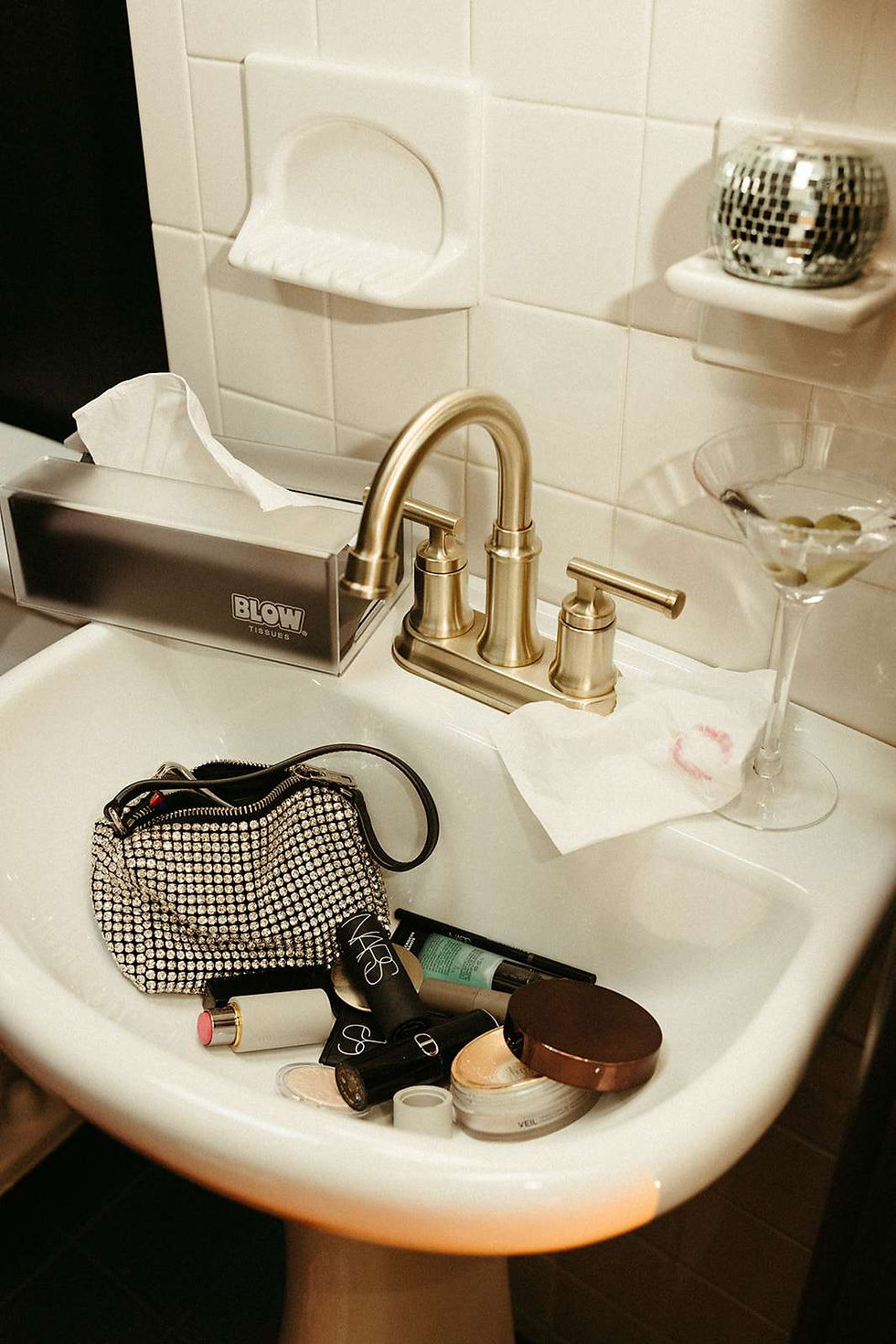
In beauty, we can spend considerable time examining what comes into contact with our skin. We compare textures, study ingredients, and develop strong preferences about how a product feels. Tissues tend to escape that attention, even when we are reaching for them repeatedly throughout the day.
Westphal began with the discomfort she knew firsthand: a raw nose and the assumption that grabbing several tissues at once was simply part of having a cold.
Testing different ply counts, lotions, and materials changed her expectations. Some of the products she tried felt, in her words, “basically sandpaper.” Trying a tissue above four-ply helped convince her that Blow needed to be a premium tissue brand as well as a refillable system.
The quality of the tissue became the part she was least willing to compromise on.
“So much of the original ‘aha’ moment came from legitimate pain and frustration with tissues leaving my skin red and raw,” she says. “I didn’t want to create something that looked better but didn’t actually solve that problem.”
A box can earn someone’s attention, but the tissue inside has to justify the purchase each time they reach for it.
Research also prompted Westphal to look more closely at the materials and additives used in paper products, including the use of virgin tree pulp. These were decisions she had never thought to question as a customer. Learning more made the familiar disposable-box routine seem increasingly strange to her: buy, use, discard, repeat.
Her experience raises a useful question for anyone attentive to skincare. How much thought have we given the paper product we might rub across the same patch of skin dozens of times during a cold?

A box with a longer life
Blow’s refillable system begins with a straightforward change in routine: keep the box and replenish the tissues.
For Westphal, the box itself deserved the same scrutiny she would have brought to a product on a retail floor. Early development involved extensive attention to color, with the goal of making the system work across different interiors and personal tastes.
She knows there is no single collection that will satisfy everyone. Instead, she hopes to rotate new colors and eventually establish a core assortment based on what customers respond to.
That responsiveness now extends to the entire experience of receiving the product. Packaging has become a growing focus, both for its role in introducing the brand and for how Blow might eventually appear on a retail shelf.
“Packaging is such a huge branding opportunity, and I definitely didn’t explore it enough in version one,” she says.
The next version will include changes to the packaging, box, and tissue informed by customer feedback. For a founder who spent the early stages working through hypotheses, having that information is a welcome development.
“There’s something very satisfying about finally having real-world information instead of having to guess at everything.”

Improving as the business grows
Westphal is candid about the trade-offs involved in developing Blow, particularly around sustainability. Researching the category expanded her ambitions, while building the business required her to establish what she could realistically accomplish at the outset.
“There was so much I didn’t know when I started that I know now, and I’ve had to give myself some grace with that,” she says.
Her longer-term goals include making all of the brand’s packaging biodegradable and finding ways to reduce its overall carbon footprint. She describes these as work still to be done, with continued evaluation part of how she wants the company to operate.
“My goal is for us to always be evaluating and improving rather than pretending we got everything perfect on day one.”
That openness gives customers a clearer view of the business as it develops. The refillable system is already central to Blow’s proposition; other ambitions will require further decisions, resources, and revisions. Westphal is willing to acknowledge that distance and keep working through it.

From school supply lists to classroom support
The connection between tissues and public schools was already familiar to Westphal. When she thought about the occasions that prompted tissue purchases, she kept returning to back-to-school shopping and supply lists asking each student to bring two boxes.
She had wanted a giveback component built into Blow from the beginning. Her husband, a public school teacher who had used DonorsChoose to help fund classroom projects, suggested reaching out to the organization.
Those conversations helped her identify a way to support classrooms that could scale with the business. The ability to keep the brand’s donation history public was especially appealing.
“I also love that our donation history can stay public, because it creates accountability around the commitment instead of it just being something we say we do,” she explains.
The relationship connects an everyday product with a setting where it is already needed, while giving Westphal a structure for growing the commitment over time.

Customers are changing the opportunity
Westphal expected people to notice the refillable box first. Customer feedback has made her reconsider which part of Blow’s offering carries the greatest weight.
She reports frequent comments about the tissue quality, including customers calling it “life changing” or saying they can no longer use anything else. The enthusiasm has reinforced her suspicion that habitual purchases do not necessarily reflect affection for the products we buy.
“I don’t think most of us were buying the big incumbent tissue brands because we genuinely loved them,” she says. “We were buying them because they were the default.”
For Blow, that distinction has changed how she understands the business.
“I originally thought the refillable box would be the thing that got people in the door and the tissue would support it. Customer feedback has made me realize that the box might catch their attention, but a better tissue is often why they purchase.”
Design remains an introduction to the brand, while the tissue gives customers something tangible to evaluate through daily use. Together, they offer a reason to reconsider a purchase that previously required almost no decision at all.

Taking tissues seriously, with a sense of humor
A small retail test at The Shelf this spring provided early lessons Westphal is applying as she prepares Blow’s next version. Retail expansion is firmly on her wish list, alongside opportunities in boutique hotels, high-end spas, and medical spas, where appearance and performance both contribute to the experience.
Asked about Shark Tank, she says it would be “a crazy cool opportunity.” Her five-year vision, though, comes back to the routine she originally questioned.
“I’d love for the refillable tissue system to feel so obvious that going back to disposable tissue boxes feels ridiculous.”
Getting there will require the product obsession she brings to the business, but she intends to leave room for fun.
“I take what I put into the world seriously, so I’m going to obsess over the product, the design and the details,” she says. “But at the end of the day, they’re tissues. We’re gonna have some fun with that, and I think that brands with personality are a breath of fresh air.”
Blow began because Westphal was tired of accepting an uncomfortable experience from a familiar purchase. As the brand develops, she is giving customers a reason to pay closer attention to what they reach for, what they keep, and what they choose to buy again.


Comments